
 by
by How to Frame a Poster: Sizes, Mats and What 18×24 Actually Fits
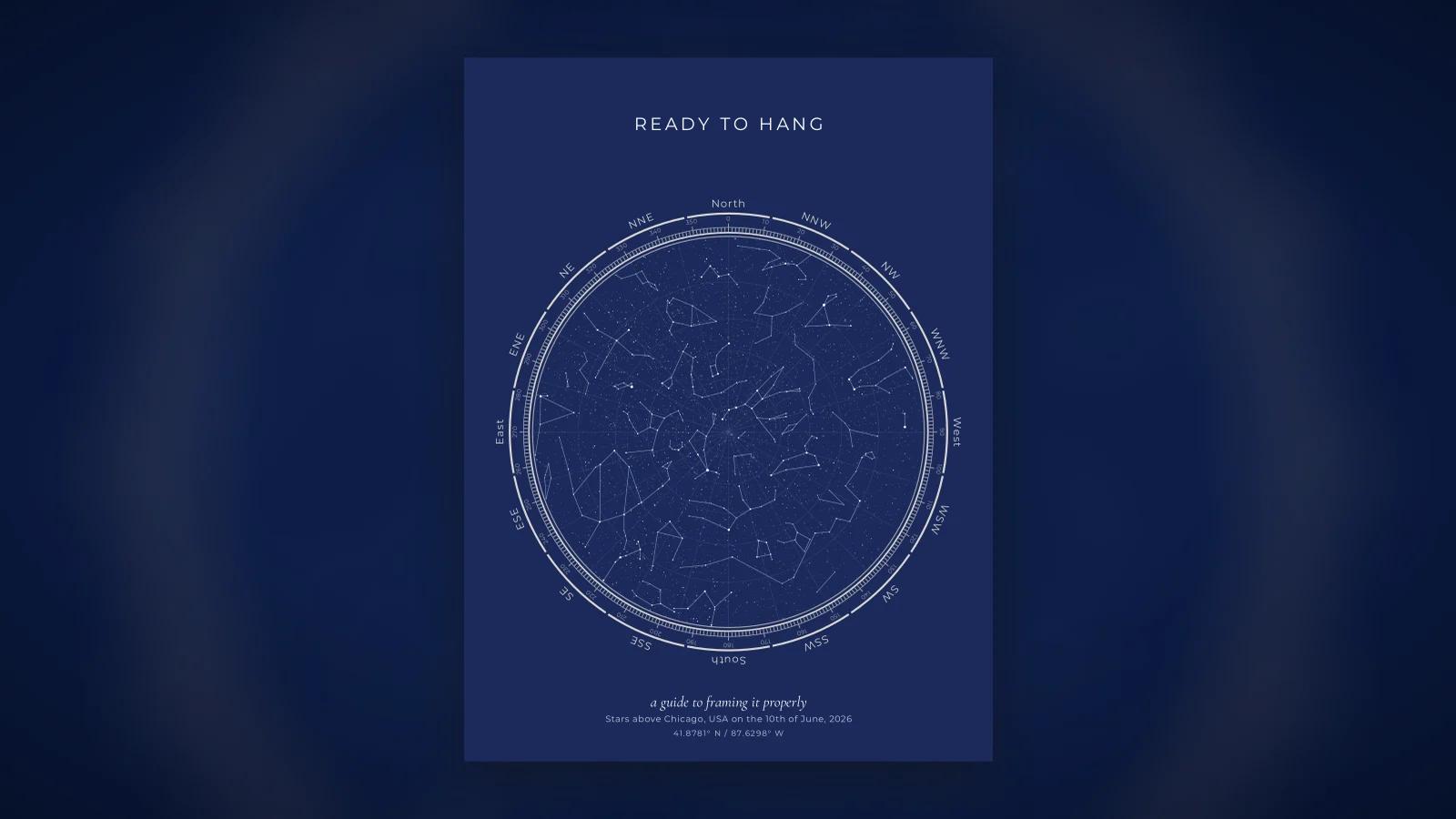
A poster and a frame do not automatically fit each other, and this trips up more people than you would expect. "Standard" poster sizes and "standard" frame sizes both exist, but they come from slightly different conventions, and a print that is a fraction of an inch off from a frame's interior dimensions will not sit properly without trimming, matting, or a custom frame order.
Standard poster and frame sizes that actually match
The good news: several print and frame sizes are genuinely standardised and widely available together. 12 by 16 inches, 16 by 20 inches, 18 by 24 inches, and 24 by 36 inches are the most common poster sizes, and off-the-shelf frames in these exact dimensions are widely stocked by major retailers, framing shops, and online sellers. If your print is one of these exact sizes, buying a same-labelled frame should fit without any extra work.
Where people run into trouble is with prints sized just outside these standards, an 11 by 14 print bought expecting it to fit a 12 by 16 frame, for instance, which will not sit flush without a mat or a trim. Always check the print's exact dimensions against the frame's interior dimensions, not just the size label, before assuming a match.
Reading a frame's actual size
Frame sizing usually refers to the interior opening, the space the print or mat sits inside, but always verify this rather than assume, since some listings use the outer frame dimension instead, particularly for frames with a wide moulding. When buying online, check the product description specifically for "interior," "opening," or "fits" dimensions rather than relying on the headline size alone.
To mat or not to mat
A mat is a border of blank material, usually acid-free board, placed between the print and the frame's inner edge. It serves two purposes: aesthetically, it gives the eye a resting space before the frame itself, which many people feel makes a poster read more like fine art; practically, it holds the print slightly away from the glass or acrylic, reducing the risk of moisture becoming trapped against the print's surface over time.
Framing edge to edge, without a mat, maximises the visible image size within a given frame and suits bolder, more graphic prints where every inch of the image matters. For a print with fine detail, such as a night sky with many small points of light, a mat's breathing room can actually help the eye take in the image rather than losing it at the very edge of the frame.
If you do use a mat, note that a matted print requires a frame with an opening larger than the print itself, since the mat sits between them. A 12 by 16 inch print with a 2-inch mat border needs a 16 by 20 inch frame, not a 12 by 16 one; check the maths before ordering both pieces separately.

Glass or acrylic
Acrylic (sometimes called Plexiglas or Perspex) is significantly lighter than glass, which matters both for shipping and for wall-mounting, since a large glass-fronted frame can be genuinely heavy and harder to hang securely. Acrylic is also shatter-resistant, a real advantage for a nursery, a household with children or pets, or anything being shipped, where a dropped glass frame is both a mess and a hazard. Its main drawback is a slightly greater tendency to pick up surface scratches over years of handling compared to glass.
Glass offers marginally better clarity and scratch resistance but is heavier and genuinely breakable, both in shipping and on the wall. For most home framing situations, particularly anything mailed or hung in a busy household, acrylic is the more practical default; glass remains a reasonable choice for a smaller, carefully handled piece in a low-traffic spot.
Mounting and backing
Behind the print, a rigid backing board keeps the whole assembly flat and prevents the paper from bowing or rippling over time, particularly in a room with humidity changes. Foam-core board is a common, affordable choice; acid-free options exist for anyone concerned about long-term paper preservation. If your print arrived rolled rather than flat, let it rest under light, even weight for a day or two before framing, which helps it lie flatter against the backing and reduces the risk of visible curl at the edges once framed.
Hanging hardware and wall placement
Most framed prints in the sizes discussed here use either a sawtooth hanger for smaller, lighter frames or a wire-and-D-ring setup for anything larger or heavier, which distributes weight more evenly and allows finer adjustment of the hanging angle. For anything above roughly 18 by 24 inches, use two wall anchors rather than a single nail, both for stability and to keep the frame level over time as the wall settles.
A commonly cited rule of thumb for eye-level placement is to centre the artwork at about 57 to 60 inches from the floor to its centre point, which approximates average eye level for a standing adult; adjust downward over a piece of furniture like a sofa or sideboard, where the furniture itself changes the natural viewing height.
Ready-made frames versus custom framing
Ready-made frames, bought off the shelf at the standard sizes discussed above, cost dramatically less than custom framing from a frame shop, often a tenth of the price or less for a comparable size. Custom framing earns its price with exact-fit construction for non-standard sizes, higher-grade materials, and options like conservation-grade glazing or hand-joined wood mouldings that ready-made frames do not offer. For a standard-size print, a good ready-made frame is usually the more sensible choice; custom framing is worth its cost primarily for an odd size, a valuable or irreplaceable original, or a specific material finish you cannot find off the shelf.
What frames typically cost
Ready-made frames in the common sizes discussed here range widely by material and finish: basic frames in standard sizes are generally inexpensive and widely available at large retailers, while better-quality wood frames with proper glazing cost more. Custom framing from a dedicated frame shop typically costs several times more than an equivalent ready-made frame, reflecting the labour of building to an exact size and the wider range of materials on offer. As with printing, treat any specific price as a rough guide, since materials, region, and retailer vary considerably.
A note on shipping a framed piece
If you are giving a framed print as a gift to someone in another location, shipping a fully framed and glazed piece carries real risk of breakage, particularly with glass rather than acrylic. Many people in this situation choose to ship the print unframed and either arrange local framing at the destination or send the frame separately, packed more robustly than the print itself. If you order a professionally framed print through a service that ships pre-assembled, check that they use acrylic rather than glass and describe their shipping protection specifically, since this is precisely the scenario where a poorly packed glass frame fails.
Framing a star map specifically
For a dark image like a night sky print, a black or dark wood frame tends to complement the image better than a light or ornate frame, which can compete visually with the deep background rather than let it read as intentional. If you order one of our framed prints directly, this decision is already made for you: a black wood frame with a slim profile, a shatter-resistant acrylic front, and the hanging hardware already fitted, arriving ready to hang with nothing left to assemble. If you would rather buy the digital file and frame it yourself, choose a size from the three we support, 12 by 16, 18 by 24, or 24 by 36 inches, all of which match widely available standard frames. Designs like noir and navy suit a dark frame especially well; lighter designs such as paper hold up better against a lighter or more neutral frame if you prefer that look.
The designer is free to try if you have not made your map yet, and shows the finished file at the exact proportions these standard frames expect. If you would rather order a print already framed, the pricing page covers the three sizes we offer and what's included at each, and our guide on where to print a poster covers the step before framing if you are handling the printing yourself.
Frequently asked questions
Does a 12x16 print fit a standard off-the-shelf frame?
Yes, 12 by 16 inches is a common standard poster frame size widely stocked by major retailers, so an off-the-shelf frame in that exact size should fit without trimming or matting, provided the print's dimensions are exactly 12 by 16 inches rather than a close approximation.
What size frame do I need for an 18x24 print?
An 18 by 24 inch frame, which is also a common standard size, though slightly less universally stocked than 12x16 or 16x20. Check the frame's interior dimensions rather than its outer dimensions when buying, since outer frame size can include the moulding width.
Should I use a mat with a poster, or frame it edge to edge?
Both are legitimate choices. A mat adds a border of blank space between the print and the frame's inner edge, which can make a poster feel more like fine art and gives the eye a rest before the frame itself; framing edge to edge maximises the visible image size and suits a bolder, more graphic print. For a night sky image with fine detail, many people prefer a mat, though it is a matter of taste.
Glass or acrylic for framing a poster?
Acrylic is lighter, shatter-resistant, and generally the better choice for shipping, a nursery, or anywhere breakage is a concern; it can be more prone to surface scratching than glass over time. Glass offers a slightly clearer, more scratch-resistant surface but is heavier and breakable, a real consideration for shipping or a home with young children.
How do I frame a poster without it curling or bubbling?
Let the print lie flat under light weight for a day before framing if it arrived rolled, ensure the mounting board behind it is rigid and properly sized, and avoid trapping the print against glass or acrylic in humid conditions without an air gap, which a mat naturally provides.